
About NEMO
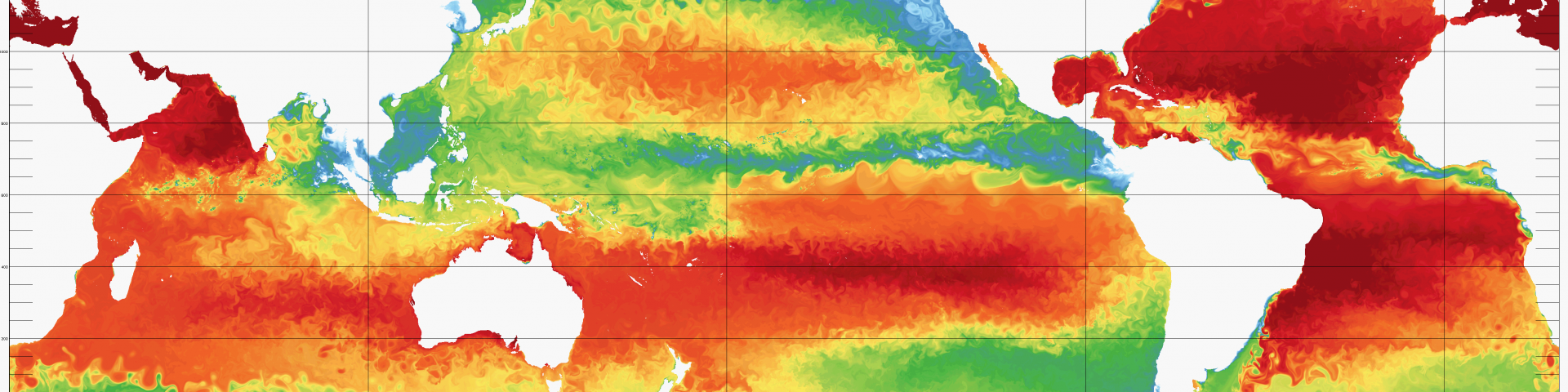
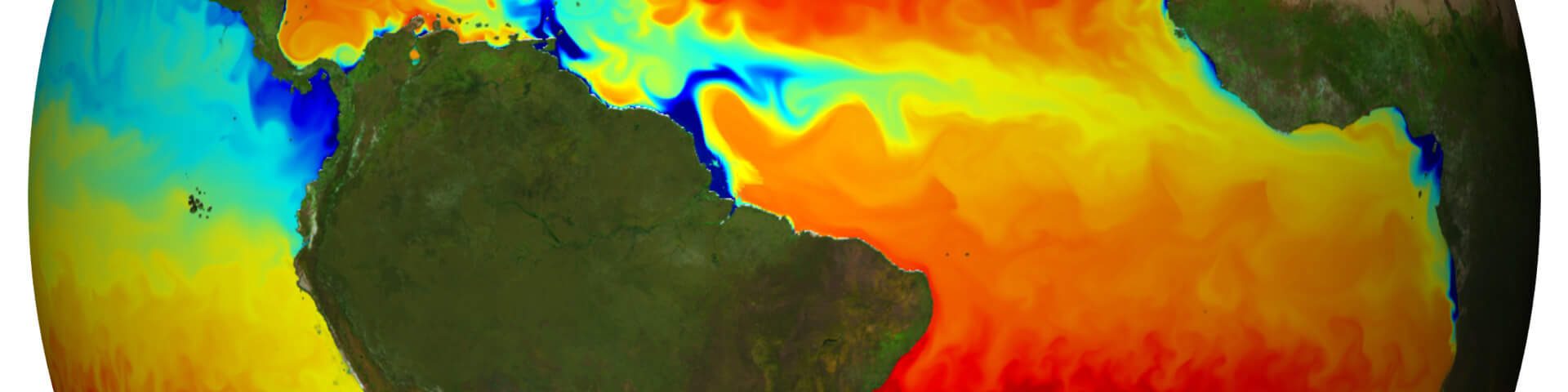
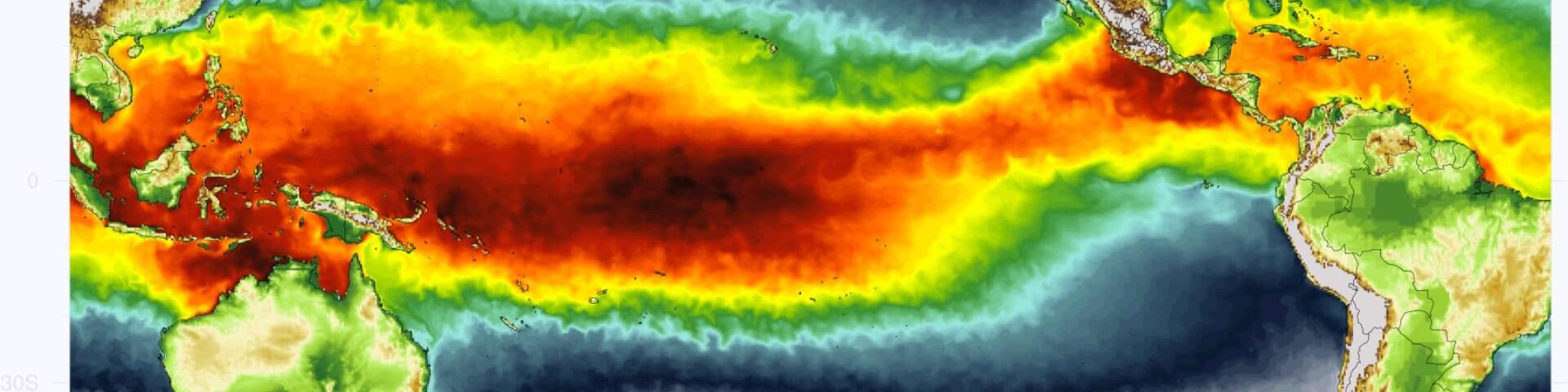
The "Nucleus for European Modelling of the Ocean" (NEMO) is a state-of-the-art modelling framework. It is used for research activities and forecasting services in ocean and climate sciences. NEMO is developed by a European consortium with the objective of ensuring long term reliability and sustainability.
NEMO is distributed under a GNU GPL compatible free licence
Overview
The NEMO ocean model has 3 major components:
- NEMO-OCE models the ocean {thermo}dynamics and solves the primitive equations
- NEMO-ICE models sea-ice {thermo}dynamics, brine inclusions and subgrid-scale thickness variations
- NEMO-TOP-PISCES models the {on,off}line oceanic tracers transport and biogeochemical processes
These physical core engines are described in their respective reference manuals listed below:
| Component | Reference Manual | DOI |
|---|---|---|
| NEMO-OCE | NEMO Ocean Engine |  |
| NEMO-ICE | NEMO Sea Ice Engine |
 |
| NEMO-TOP-PISCES | NEMO Tracers Engine |  |
Additional capabilities
- Creation of seemless embedded zooms thanks to the 2-way nesting package AGRIF
- Input-Output through effective XIOS software
- Couple to other Earth system components using OASIS
- Opportunity to integrate an external biogeochemistry model
- Versatile data interface
- Utilities provided to {pre,post}process your data
Reference Configurations and Test Cases
Several built-in configurations are provided to evaluate the skills and performances of the model. They can be used for a first easy set-up and as a template for a new configuration. Idealized test cases addressing specific physical processes are also available for download.
Publications
Since 2014 the project has a Special Issue in the open-access journal Geoscientific Model Development (GMD) from the European Geosciences Union (EGU). The main scope is to collect relevant manuscripts covering various topics and to provide a single portal to assess the model potential and evolution.Consortium Partners
The NEMO Consortium comprises of 5 European institutes (in place since 2008). Together these partners support the sustainable development of NEMO so as to ensure a reliable and evolving framework that meets user's needs.


Together with the NEMO Working groups, the consortium members define the NEMO long-term development strategy that is implemented by the System Team on a yearly basis in order to regularly release a new versions of the code. The NEMO Working Groups aim to gather community expertise so as to advise development activities.